When facing an unplanned pregnancy, understanding your options is crucial for making an informed decision about your reproductive health. In Nepal, where safe abortion has been legal since 2002, women have access to two primary methods of pregnancy termination: medical abortion vs surgical abortion.
This comprehensive guide will help you understand the key differences between these abortion procedures, their safety profiles, costs, and what to expect during each process.
Understanding Medical Abortion vs Surgical Abortion: The Fundamental Differences
The choice between medical abortion vs surgical abortion depends on various factors including gestational age, personal preferences, medical history, and individual circumstances. Both methods are safe & effective when performed by qualified healthcare providers in Nepal.
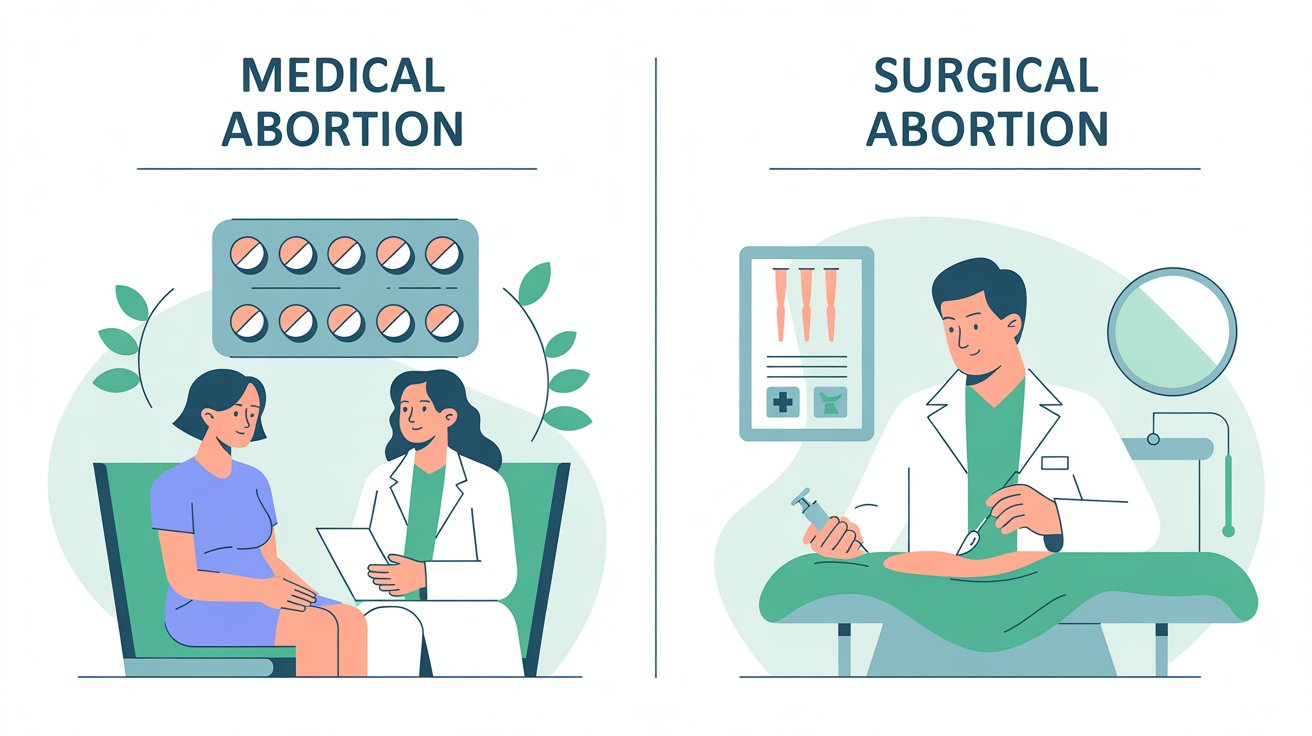
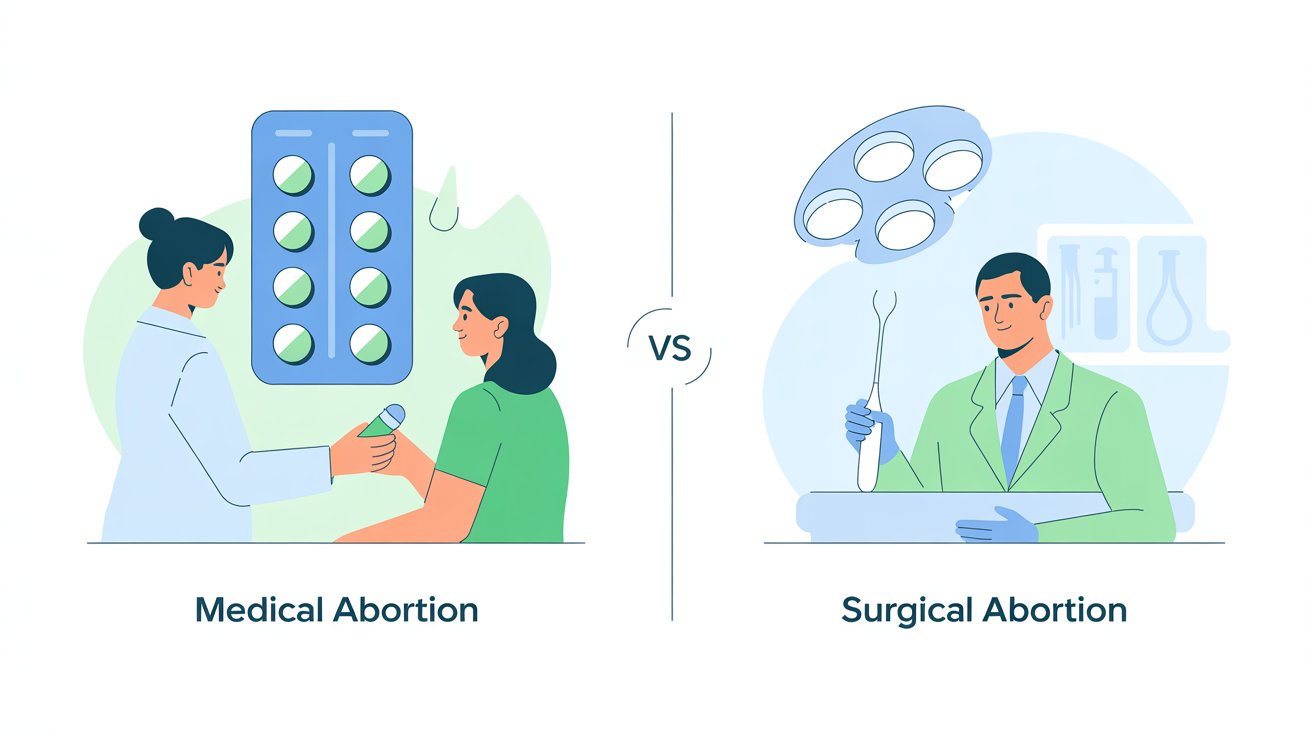
Medical abortion, also known as medication abortion or the abortion pill, involves taking medications to end a pregnancy. This non-surgical abortion method can be performed up to 10 weeks of pregnancy and allows women to complete the process in the privacy of their homes.
Surgical abortion is an in-clinic abortion procedure that involves a minor surgical intervention to remove pregnancy tissue. This abortion procedure can be performed throughout pregnancy, with different techniques used depending on gestational age.
How Many Weeks Pregnant Can You Be?
Pregnancy is counted in weeks gestation, starting from the first day of your last menstrual period. Many people do not know they are pregnant until they are 6 days or even 8 weeks pregnant.
Most women choose abortion care when they are 9 weeks of pregnancy, 9 weeks and 6 days, or 63 days gestation. At this time, the uterus is still small, and both medical or surgical abortion options are usually available.
The choice will depend on how many weeks pregnant you are, how you feel about the different methods, and your individual circumstances.
Medical vs Surgical Abortion in Simple Words
Medical vs surgical abortion means choosing between using medicine or having a small clinic procedure. Both medical abortion and surgical abortion are safe ways to end a pregnancy.
In medical and surgical choices, the decision will depend on your individual circumstances, such as how far along the pregnancy is and what feels right for you.
Many women at nine weeks of pregnancy can still choose either option. An abortion can choose the method that best fits their needs with help from a doctor.
What is Medical Abortion? Understanding the Abortion Pill Process
Medical abortion represents a non-surgical approach to pregnancy termination that has gained popularity worldwide. In Nepal, this method involves the use of FDA-approved medications to safely terminating a pregnancy.
Medical Abortion and What May Happen
During a medical abortion, the medicine helps the body remove the pregnancy tissue naturally.
An abortion may cause cramps and bleeding, which is normal. Doctors explain what to expect and when to ask for help.
If you want to read more about medical abortion, your healthcare provider can give clear information and answer questions.
The Medical Abortion Process
The medication abortion process typically involves two medications taken in sequence:
- Mifepristone (RU-486): This medication blocks the hormone progesterone, which is necessary for pregnancy continuation
- Misoprostol: Taken 24-48 hours later, this medication causes uterine contractions to expel the pregnancy tissue
Timeline and Effectiveness
Medical abortion is highly effective when performed correctly. Success rates vary by gestational age:
- Up to 7 weeks: 95-98% effective
- 8-9 weeks: 94-96% effective
- 9-10 weeks: 91-93% effective
The complete process typically takes 1-2 weeks, with most women experiencing the heaviest bleeding and cramping within the first 24-48 hours after taking misoprostol.
What to Expect During Medical Abortion
During a medication abortion, you can expect:
- Heavy bleeding (heavier than a normal period)
- Strong cramping and abdominal pain
- Nausea and vomiting
- Diarrhea
- Fever and chills (temporary)
These symptoms are normal parts of the process and typically subside within a few days.
Medical Abortion Uses and Timing
Medical termination uses medicine to terminate a pregnancy. This method of abortion is often used in the first trimester, usually up to 9 weeks or 9 weeks and 6 days gestation.
After taking the first medicine, the second pill is taken 24 hours after taking the first one. Most people start to feel uterine spasms and vaginal bleeding within hours after taking the second pill, often between 3 to 5 hours.
Bleeding may be less or more than a normal period. Over-the-counter pain medicine can help with pelvic pain.
Medical abortion is a safe and effective method, but sometimes people may need a surgical procedure if the abortion does not fully work.
What is Surgical Abortion? Understanding In-Clinic Procedures
Surgical abortion refers to medical procedures performed in clinical settings to end pregnancy. When comparing medical abortion vs surgical abortion, surgical methods offer immediate completion and are suitable for later gestational ages.
Types of Surgical Abortion Procedures
First Trimester Surgical Abortion (Aspiration/Suction)
- Performed up to 12-14 weeks of pregnancy
- Uses gentle suction to remove pregnancy tissue
- Takes 5-10 minutes to complete
- Local anesthesia or conscious sedation options available
Second Trimester Surgical Abortion (Dilation and Evacuation – D&E)
- Performed after 14 weeks of pregnancy
- More complex procedure requiring cervical preparation
- Takes 15-30 minutes to complete
- Typically requires sedation or general anesthesia
The Surgical Abortion Experience
During a surgical abortion procedure, you can expect:
- Pre-procedure counseling and consent
- Pain management through anesthesia
- The actual procedure lasting 5-30 minutes depending on type
- Recovery time of 30-60 minutes in the clinic
- Same-day discharge in most cases
How Surgical Abortion Works
Surgical termination of pregnancy is done by trained doctors in a clinic. During the procedure, the doctor uses suction to remove the contents of the uterus.
In surgical abortion in the first trimester, the procedure takes only a short time. Many people have less bleeding compared to medical abortion.
Surgical abortion is a safe and effective method and can be used later in pregnancy, even up to 23 weeks and 6 days gestation, when allowed by law and medical guidance.
Medical Abortion vs Surgical Abortion: Safety and Effectiveness Comparison
When evaluating medical abortion vs surgical abortion for safety, both methods are extremely safe when performed by qualified providers. The choice between these abortion procedures should be based on individual circumstances and preferences.
Safety Profiles
Medical Abortion Safety:
- Overall complication rate: Less than 1%
- No risk of surgical complications
- Minimal risk of infection
- Can be reversed in very early stages if desired (though this is rare and controversial)
Surgical Abortion Safety:
- Overall complication rate: Less than 0.5%
- Minimal risk when performed by experienced providers
- Immediate completion reduces anxiety for some women
- Lower risk of incomplete abortion
Effectiveness Comparison
Both methods are highly effective:
- Medical abortion: 95-98% effective (varies by gestational age)
- Surgical abortion: Over 99% effective regardless of gestational age
In rare cases where medical abortion is incomplete, a surgical procedure may be needed to complete the process.
Medical Abortion vs Surgical Abortion: Quick Comparison
Medical abortion and surgical abortion are different ways to end a pregnancy. The right option depends on pregnancy duration, health needs, medical advice, and personal preference.
| Feature | Medical Abortion | Surgical Abortion |
|---|---|---|
| Method | Uses prescribed medicines to end a pregnancy | Uses a clinical procedure to remove pregnancy tissue |
| Where it happens | May be completed at home with medical guidance | Usually performed at a clinic or hospital |
| Procedure time | The process usually takes longer | The procedure itself is usually completed quickly |
| Bleeding | Bleeding and cramping are common | Bleeding may be lighter and shorter |
| Recovery | Most people return to normal activities within a few days | Many people return to normal activities within a few days |
| Privacy | Offers more privacy because part of the process may happen at home | Requires a visit to a healthcare facility |
| Follow-up | Follow-up may be needed to confirm the abortion is complete | Follow-up may be recommended based on the procedure and provider |
| Best method | Depends on pregnancy duration, health, and personal circumstances | Depends on pregnancy duration, health, and personal circumstances |
Abortion Law in Nepal: Understanding Your Legal Rights

Understanding abortion law in Nepal is essential for accessing safe and legal services. Nepal legalised abortion in March 2002, under the 11th Amendment to the Civil Code, making it one of the more progressive countries in South Asia regarding reproductive rights.
Current Legal Framework
In Nepal, abortion is legal on request through 12 weeks of pregnancy and up to 28 weeks for health and other reasons. The legal conditions include:
- Up to 12 weeks: Available on request for any reason
- 12-28 weeks: Available for specific medical, legal, or social reasons including:
- Risk to maternal life or health
- Fetal abnormalities
- Cases of rape or incest
- Contraceptive failure in married women over 40
In 2018 Nepal passed the Right to Safe Motherhood and Reproductive Health Act 2018, which ensures the right to safe abortion for all women.
Accessing Legal Abortion Services
Legal abortion services in Nepal are available through:
- Government hospitals and health centers
- Accredited private clinics
- Trained healthcare providers
The government of Nepal recently announced that abortion services will be available free of charge at public health facilities, making safe abortion more accessible to women across the country.
Abortion Cost in Nepal: Understanding Financial Considerations
The cost of abortion in Nepal varies significantly depending on the type of procedure, provider, and location. Understanding abortion cost in Nepal helps in planning and accessing appropriate services.
Medical Abortion Cost
The abortion pill cost in Nepal typically ranges from NPR 800 to NPR4,000, depending on the type of providers, their location, and medicine brands. Factors affecting abortion pill cost include:
- Public facilities: Often free or heavily subsidized
- Private clinics: NPR 2,000-5,000 for complete medical abortion
- Pharmacy costs: NPR 800-2,000 for medications (though illegal without prescription)
Surgical Abortion Cost
Surgical abortion procedures in Nepal typically cost:
- First trimester surgical abortion: NPR 3,000-8,000
- Second trimester procedures: NPR 8,000-20,000
- Private hospital fees: May be higher depending on facility
Additional Costs to Consider
When budgeting for abortion cost in Nepal, consider:
- Consultation fees
- Laboratory tests
- Follow-up visits
- Transportation costs
- Pain medications
- Time off work
Finding Safe Abortion Services: Abortion Clinic Near Me

Locating a qualified abortion clinic near me is crucial for safe pregnancy termination. In Nepal, several options are available for accessing safe abortion services.
Types of Abortion Providers
Government Facilities:
- District hospitals
- Primary health centers
- Sub-health posts (for early medical abortion)
Private Providers:
- Accredited private clinics
- Private hospitals
- NGO-run facilities like Marie Stopes Nepal
Pharmacy Access (with caution): While abortion pills are available at pharmacies, this route is not recommended as:
- It may not be legal without proper prescription
- Lacks medical supervision
- No emergency backup if complications arise
- No proper counseling or follow-up care
Questions to Ask When Choosing a Provider
When selecting an abortion clinic near me, ask:
- Is the facility legally authorized to provide abortion services?
- What are the qualifications of the healthcare providers?
- What abortion procedures do they offer?
- What is included in the cost?
- What emergency care is available if complications arise?
- Do they provide post-abortion counseling and care?
Medical Abortion vs Surgical Abortion: Recovery and Aftercare
Recovery experiences differ significantly when comparing medical abortion vs surgical abortion. Understanding what to expect can help you prepare and make an informed choice.
Medical Abortion Recovery
Recovery from medication abortion typically involves:
Physical Recovery:
- Bleeding for 1-4 weeks (normal)
- Uterine spasms that gradually decreases
- Return to normal activities within 1-2 days
- Full recovery within 2-4 weeks
Emotional Considerations:
- The process occurs over several days
- Some women find the extended timeline stressful
- Others prefer the privacy and control it offers
- Support from partner or family can be helpful
Surgical Abortion Recovery
Recovery from surgical abortion typically involves:
Physical Recovery:
- Lighter bleeding than medical abortion
- Pelvic Pain for 1-2 days
- Return to normal activities within 1-2 days
- Full recovery within 1-2 weeks
Emotional Considerations:
- Procedure is completed in one day
- Some women prefer the quick completion
- Others may feel loss of control
- Professional counseling available if needed
Follow-up Care for Both Methods
Regardless of which method you choose in the medical abortion vs surgical abortion comparison, follow-up care includes:
- Monitoring for complete abortion
- Infection prevention and detection
- Contraceptive counseling
- Emotional support if needed
- Return to normal menstrual cycles
Risks and Side Effects to Know About
Abortion is safe, but like any medical care, there can be risks and side effects. These may include cramps, bleeding, or feeling tired.
With medical abortion, bleeding can last longer. With surgical abortion, bleeding may be lighter. Both medical & surgical abortion methods are very safe when done by trained providers.
It is important to make sure the abortion is complete by going to follow-up visits and accessing abortion care when needed.
Unwanted Pills and Safe Abortion Practices

The term “unwanted pills” often refers to abortion medications, but it’s crucial to understand that proper medical supervision is essential for safe use. When considering medical abortion vs surgical abortion, always prioritize safety over convenience.
Risks of Unsupervised Medication Use
Using abortion pills without proper medical guidance can lead to:
- Incomplete abortion requiring surgical intervention
- Severe bleeding requiring emergency care
- Infection from retained pregnancy tissue
- Missed ectopic pregnancy (potentially life-threatening)
- Incorrect dosing or timing
Ensuring Safe Abortion Practices
For safe abortion in Nepal:
- Always consult qualified healthcare providers
- Use only legally prescribed medications
- Follow all medical instructions carefully
- Attend all follow-up appointments
- Seek immediate help if complications arise
Making the Right Choice: Medical Abortion vs Surgical Abortion
Deciding between medical abortion vs surgical abortion is a personal choice that depends on various factors. Consider these aspects when making your decision:
Personal Factors
Choose Medical Abortion if you:
- Are within ten weeks of pregnancy
- Prefer privacy and home-based completion
- Want to avoid surgical procedures
- Have reliable support system at home
- Can attend multiple appointments
Choose Surgical Abortion if you:
- Are beyond 10 weeks of pregnancy
- Prefer quick, single-day completion
- Have medical conditions contraindicating medication
- Live far from emergency medical care
- Prefer immediate resolution
Medical Factors
Your healthcare provider may recommend one method over another based on:
- Gestational age
- Medical history
- Current health conditions
- Previous abortion experiences
- Access to emergency care
How Sanjivani Diagnostic Lab Center Assists with Medical Abortion vs Surgical Abortion
Sanjivani Safe Abortion Center, a government-approved reproductive healthcare facility in Kalanki-04, Kathmandu, provides comprehensive support for women considering medical abortion vs surgical abortion options.
Established on 10th May, 2073 BS, Sanjivani offers safe, legal, and confidential abortion services with experienced medical teams providing respectful care, post-abortion support, family planning, and gynecological consultations.
Their integrated approach ensures patients receive complete care under one roof, from initial consultation through post-procedure follow-up.
When evaluating medical abortion vs surgical abortion choices, Sanjivani’s diagnostic capabilities play a crucial role in patient care. Their laboratory services provide essential pre-procedure testing including pregnancy confirmation, blood work, and health assessments necessary for safe abortion procedures.
The center’s VIDEO X-ray and ultrasound services help confirm gestational age, rule out ectopic pregnancy, and ensure appropriate method selection between medical & surgical options.
This comprehensive diagnostic support helps healthcare providers recommend the most suitable approach in the medical abortion vs surgical abortion decision.
Sanjivani’s medical team consists of licensed doctors, trained nurses, and experienced healthcare providers dedicated to ensuring patient safety, dignity, and comfort throughout both medical & surgical abortion procedures.
For medical abortion, they provide supervised medication administration, detailed home-care instructions, and 24/7 emergency support during the process.
Their surgical abortion services include vacuum aspiration for first trimester pregnancies and more advanced procedures when medically indicated, all performed following government medical guidelines with appropriate anesthesia and post-operative care.
The center’s commitment to patient-centered care extends beyond the medical abortion vs surgical abortion procedure itself. They provide comprehensive sexual and reproductive health services including expert counseling, education, and access to safe, effective contraception, along with personalized family planning support.
Sanjivani offers pre-procedure counseling to help women make informed decisions, emotional support throughout the process, and comprehensive post-abortion care including contraceptive counseling and follow-up monitoring to ensure complete recovery and prevent future unintended pregnancies.
Choosing the Right Method of Abortion
There are two types of abortion: medical and surgical. People having an abortion can usually choose the method that feels right for them.
The choice will depend on weeks of pregnancy, health needs, and personal comfort. Some people prefer medicine at home, while others prefer a quick clinic visit.
Both surgical or medical abortion options are safe, and help is available to guide each person through the process.
Getting Help and Support
Some organizations, like MSI and MSI Reproductive Choices, provide trusted information about surgical and medical abortion care around the world.
These services help people understand their options and support safe decision-making. Talking to trained providers helps make sure abortion care is done safely and with respect.
Frequently Asked Questions About Medical Abortion vs Surgical Abortion
1. Which is safer: medical abortion vs surgical abortion?
Both methods are extremely safe when performed by qualified providers. The choice between medical abortion vs surgical abortion should be based on individual circumstances rather than safety concerns alone.
2. Can I choose between medical abortion vs surgical abortion?
In most cases, yes. Within the appropriate gestational age limits, women can usually choose their preferred method after consulting with healthcare providers.
3. How effective is each method in the medical abortion vs surgical abortion comparison?
Medical abortion is 95-98% effective, while surgical abortion is over 99% effective. Both are highly reliable methods of pregnancy termination.
4. Which method is more private?
Medical abortion offers more privacy as it can be completed at home, while surgical abortion requires clinic visits. However, both methods can be accessed confidentially.
5. What about future fertility after medical abortion vs surgical abortion?
Neither method typically affects future fertility when performed safely. Most women can conceive again within a month of either procedure.
Conclusion: Making an Informed Decision About Medical Abortion vs Surgical Abortion
Choosing between medical abortion vs surgical abortion is an important healthcare decision that should be made with proper medical guidance and support. Both methods are safe, effective, and legal in Nepal when performed by qualified providers.
Key takeaways for the medical abortion vs surgical abortion decision:
- Both methods are highly safe & effective
- Medical abortion offers privacy but takes longer to complete
- Surgical abortion provides immediate completion but requires clinic visits
- Cost varies but both are accessible in Nepal
- Legal abortion services are available throughout the country
- Professional medical care is essential for either method
Remember that accessing safe abortion services is your legal right in Nepal. Whether you choose medical abortion or surgical abortion, ensure you receive care from qualified, licensed providers who can offer appropriate counseling, medical care, and follow-up support.
For personalized advice about medical abortion vs surgical abortion options, consult with healthcare providers at accredited facilities.
They can help you understand which method might be most appropriate for your specific situation, ensuring you receive the safest and most appropriate care for your needs.
Your reproductive health decisions are personal and important. With proper information and medical support, you can make the choice that’s right for you in the medical abortion vs surgical abortion comparison, ensuring both your physical and emotional well-being throughout the process.