Recovery after medical abortion usually takes one to two weeks, although every woman’s experience is different. Most people experience bleeding, cramping, and gradual healing during this time. Understanding what is normal and when to seek medical care can help you recover safely.
Every woman’s body is different. So, recovery after medical abortion does not look the same for everyone. Some women feel better in a few days. Others need a little more time. Both are normal.
In this guide, we will walk you through everything about recovery after medical abortion. You will learn what to expect, how long recovery after medical abortion usually takes, how to take care of yourself, warning signs to watch for, and when to see a doctor. We will also answer common questions women in Nepal ask about medical abortion recovery.
What Is Recovery After Medical Abortion?
Recovery after medical abortion means the days and weeks your body takes to heal after using abortion pills to end a pregnancy. Medical abortion uses two medicines. The first medicine is called mifepristone. It stops the pregnancy from growing. The second medicine is called misoprostol. It helps the uterus push out the pregnancy tissue.
After these medicines, your body starts the healing process. This is what we call medical abortion recovery. It happens in two parts:
Physical recovery – This is about your body. It includes bleeding, cramps, and your uterus going back to its normal size.
Emotional recovery – This is about your feelings. Some women feel relief. Some feel sad. Some feel both at the same time. All these feelings are normal parts of healing after medical abortion.
Recovery after abortion pills is not just about waiting for bleeding to stop. It is about your whole body and mind getting back to a healthy place, step by step.
What to Expect After a Medical Abortion
After a medical abortion, most women experience bleeding, cramping, and the passing of pregnancy tissue. These symptoms are usually strongest during the first 24 hours and gradually improve over the following days. Mild tiredness, nausea, and spotting may continue for a short time as the body heals.
Knowing what to expect after medical abortion can help you feel less worried. Your body will go through some normal changes as it heals. Let’s look at them one by one.
Bleeding After Medical Abortion
Bleeding after medical abortion is one of the most common signs that the medicine is working. Most women bleed more than a normal period at first. This heavy bleeding usually happens in the first few hours after taking misoprostol.
So, how long does bleeding last after medical abortion? For most women, heavy bleeding slows down after the first day or two. Light bleeding or spotting can continue for one to two weeks. Some women may see light spotting for up to three or four weeks. This is still part of normal recovery after medical abortion.
If bleeding does not slow down at all after a few days, or if it gets heavier instead of lighter, that could be a warning sign. We will talk more about this later.
Cramping and Pain
Cramps after medical abortion happen because your uterus is squeezing to push out the pregnancy tissue. This pain can feel like strong period cramps. Some women feel mild cramps. Others feel stronger pain, especially in the first few hours after taking misoprostol.
Pain after abortion pills usually gets better after the first day. Your healthcare provider may suggest safe pain medicine to help you feel more comfortable. Cramping is a normal and expected part of recovery after medical abortion, but very severe pain that does not go away needs medical attention.
Passing Pregnancy Tissue
What happens after abortion pills? Along with bleeding, you may see blood clots or tissue. This is the pregnancy tissue leaving your body. It can look like thick clots or clumps. This is normal and is a sign that the medicine is working.
Do not worry if this looks different from a normal period. Every body is a little different. If you are ever unsure about what you are seeing, you can always call your healthcare provider and ask.
Other Common Symptoms
Besides bleeding and cramps, your body may show a few other symptoms after medical abortion:
- Nausea – Feeling sick in your stomach, usually for a short time
- Tiredness – Feeling more tired than usual as your body heals
- Breast tenderness – Soreness in your breasts as pregnancy hormones change
- Mild fever – A small rise in body temperature for a few hours (usually goes away within 24 hours)
- Diarrhea – Loose stools, which can happen because of misoprostol
These symptoms after medical abortion are usually mild and go away on their own within a day or two. If any of these symptoms are severe or last a long time, please contact your healthcare provider.
Recovery Timeline After Medical Abortion
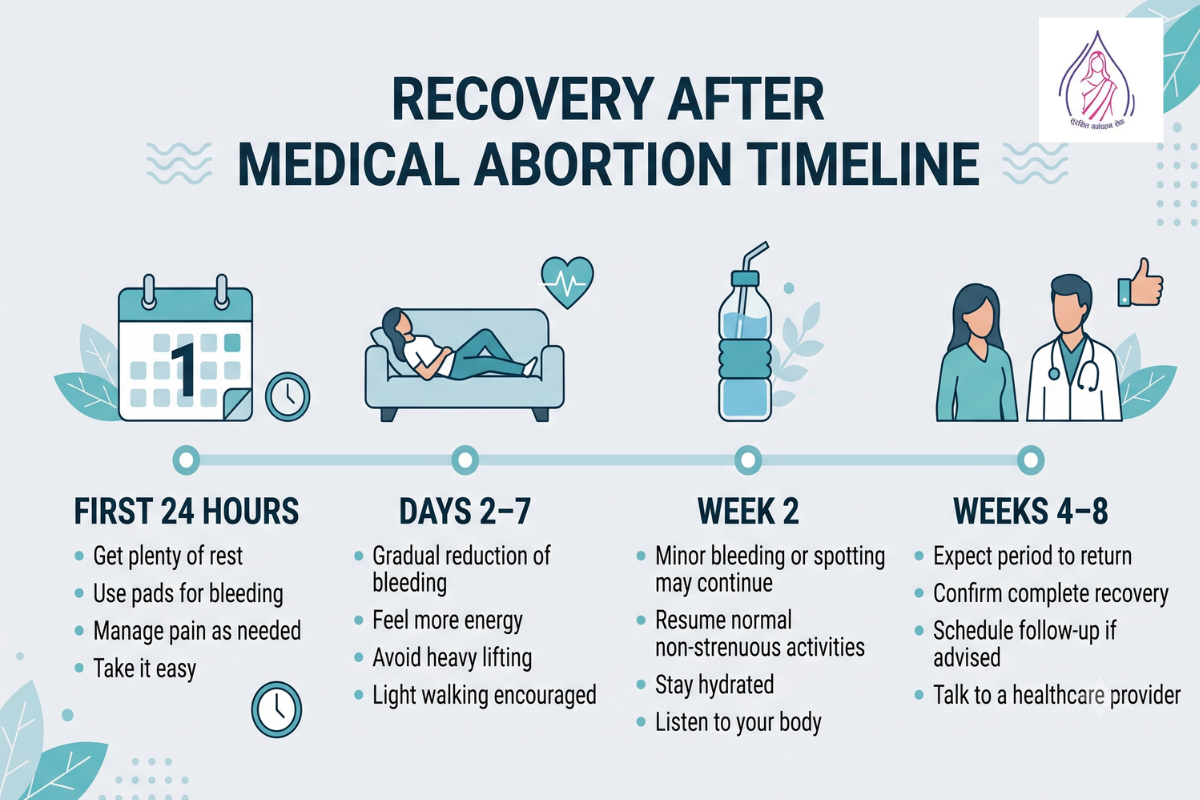
One of the biggest questions women ask is: how long does recovery take after medical abortion? Let’s break down the medical abortion recovery time into simple stages.
First 24 Hours
This is usually the most intense part of recovery after medical abortion. You may feel strong cramps and heavy bleeding within a few hours of taking misoprostol. Rest is very important during this time. Keep pads, water, and pain medicine close by.
Days 2–7
Bleeding and cramps usually start to become lighter during this week. Tiredness may still be there, but it gets better each day. Many women can slowly return to light daily activities during this stage of medical abortion recovery.
Week 2
By the second week, most women see much lighter bleeding or only spotting. Cramps are usually mild or gone. Your body is close to finishing the main part of physical recovery after medical abortion. However, your uterus is still healing inside, so gentle care is still important.
When Your Next Period Returns
Many women ask, “When will my period return after medical abortion?” In most cases, your period comes back within four to eight weeks after the abortion. Your first period after medical abortion may be a little different heavier, lighter, or with more cramps than usual. This is normal, and your cycle usually returns to its normal pattern after one or two months.
How to Take Care of Yourself During Recovery
Good self-care after medical abortion helps your body heal faster and helps you feel more comfortable. Here are simple, helpful recovery tips after medical abortion.
Get Enough Rest
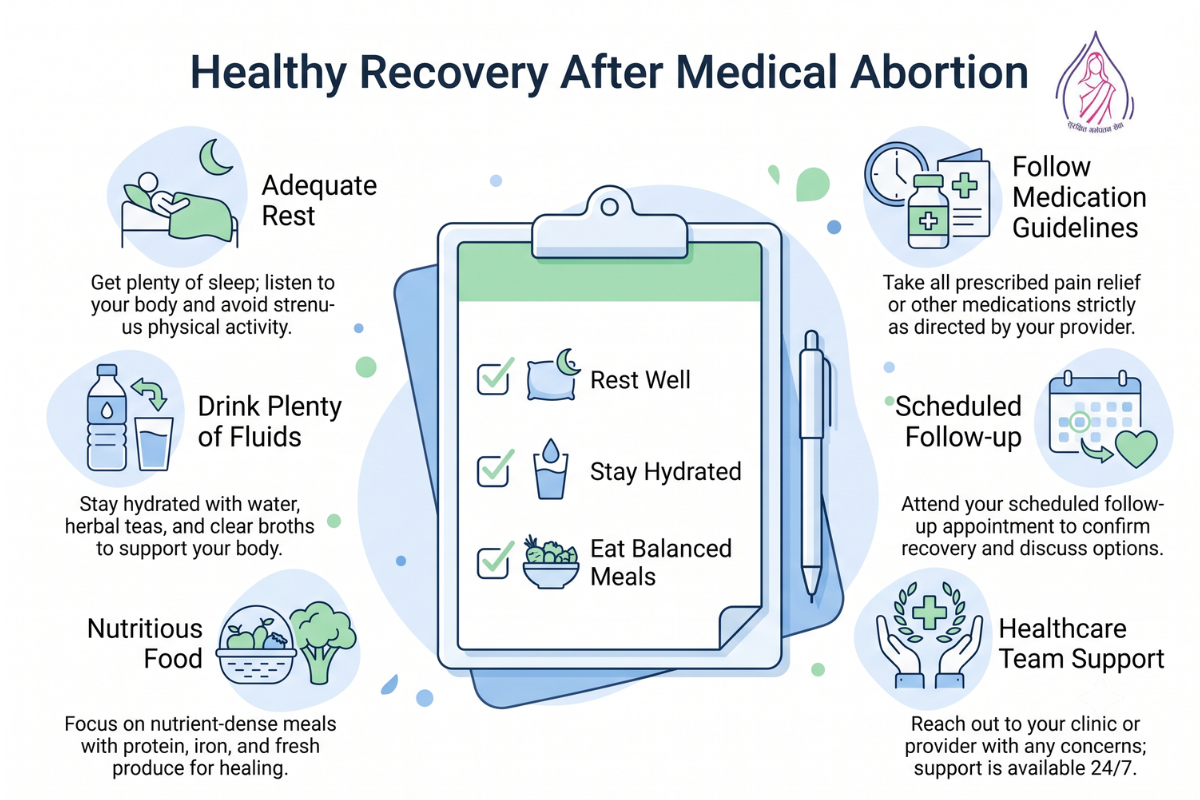
Your body is working hard to heal. Try to rest as much as you can, especially in the first few days. Sleep well and avoid rushing back into a busy schedule too soon.
Stay Hydrated
Drink plenty of water. Staying hydrated helps your body recover and can also help with tiredness and mild fever.
Eat Healthy Foods
What to eat after medical abortion matters for healing. Choose foods rich in iron, like leafy greens, lentils, and beans, since you may have lost some blood. Fresh fruits, vegetables, and warm soups are also gentle and helpful for your body during recovery after medical abortion.
Take Medicines as Directed
Only take the medicines your healthcare provider gives or approves for you. Follow the instructions carefully. This is an important part of a safe recovery after medical abortion.
Avoid Heavy Activities
Exercise after medical abortion should wait until your body feels ready. Avoid heavy lifting, intense workouts, or strenuous activities for at least a few days. Light walking is usually fine and can even help you feel better.
Personal Hygiene During Recovery
Bathing after medical abortion is safe and even helpful for comfort and cleanliness. Use pads instead of tampons or menstrual cups until your healthcare provider says it is safe to use them again. This lowers the risk of infection after medical abortion.
Also, most healthcare providers recommend waiting before having sex until bleeding has stopped and your body has fully healed. So, when can I have sex after medical abortion? It is best to wait until your follow-up visit confirms your body has recovered, usually about two weeks, and to always check with your provider first.
To recover well after a medical abortion, get enough rest, drink plenty of water, eat iron-rich foods, take medicines as directed, avoid heavy activities for a few days, and attend your follow-up appointment.
Warning Signs After Medical Abortion
While most people have a smooth recovery after medical abortion, it’s important to know the warning signs after medical abortion that need quick medical care. Please contact a healthcare provider right away if you notice:
- Excessive bleeding – Soaking through two or more large pads every hour for two hours in a row
- Severe abdominal pain – Pain that does not get better with medicine
- High fever – A fever above 38°C (100.4°F) that lasts more than 24 hours
- Bad-smelling discharge – A strong, unpleasant smell from the vaginal area
- Dizziness or weakness – Feeling like you might faint
- Fainting – Actually losing consciousness
These signs could mean heavy bleeding or an infection after medical abortion. Do not wait to see if it gets better on its own. When to see a doctor after medical abortion is a simple rule: if something feels seriously wrong, get help right away. It is always better to be safe.
Seek Medical Care Immediately If You Have:
- Heavy bleeding that soaks two pads an hour for two hours
- Severe pain that does not improve
- Fever lasting more than 24 hours
- Foul-smelling vaginal discharge
- Dizziness or fainting
Emotional Recovery After Medical Abortion
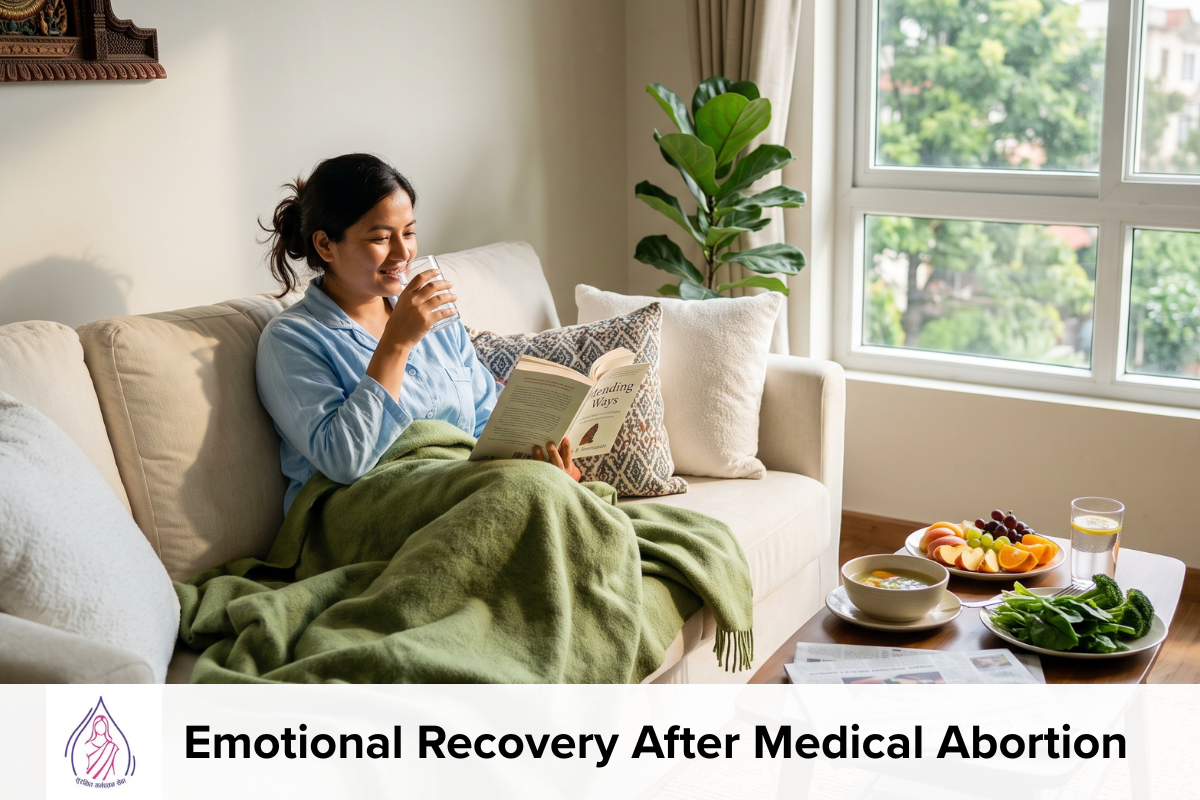
Emotional recovery after abortion is just as real as physical recovery. Your feelings may change from day to day, and that is okay.
Some women feel relief after their abortion. Some feel sadness. Some feel both at once, or feel numb for a while. Some may feel anxious or worried about the future. There is no single “right” way to feel.
Recovery after medical abortion is not only about your body it is also about giving yourself kindness and patience with your emotions. If sadness or anxiety feels heavy or does not get better with time, talking to a trusted friend, family member, counselor, or healthcare provider can help a lot. Support is always available, and asking for it is a sign of strength, not weakness.
Follow-Up Care After Medical Abortion
Follow-up after medical abortion is an important step to make sure your body has fully healed. Most healthcare providers recommend a follow-up visit about one to two weeks after taking the medicines.
During follow-up care after medical abortion, your provider may:
- Ask about your symptoms – bleeding, pain, and how you are feeling
- Do a pregnancy test after medical abortion – to check that hormone levels have gone back to normal
- Suggest an ultrasound after medical abortion – if there is any concern about whether the abortion is complete
- Confirm the abortion is complete – making sure no pregnancy tissue is left behind
Confirming medical abortion is complete is important because in rare cases, some pregnancy tissue may remain, which is called an incomplete abortion. Signs of incomplete medical abortion symptoms can include heavy bleeding that does not slow down, ongoing severe cramps, or a positive pregnancy test weeks later. This is why follow-up care after medical abortion should never be skipped, even if you feel fine.
How Do You Know a Medical Abortion Is Complete?
It can be hard to know if a medical abortion is complete just by looking at bleeding or cramps. These symptoms can change as your body passes the pregnancy tissue and starts to heal. Feeling better does not always confirm that the abortion is complete.
A pregnancy test after medical abortion or a follow-up check may be recommended to confirm that the pregnancy has ended. Your healthcare provider may also suggest an ultrasound if there is a concern that the abortion may not be complete.
If you still have strong pregnancy symptoms, heavy bleeding, severe pain, or other symptoms that worry you, contact a healthcare provider. Follow-up after medical abortion is especially important if you are not sure whether the abortion was complete.
Can You Get Pregnant Again After Medical Abortion?
Yes. Pregnancy after medical abortion can happen sooner than many people expect. Your fertility can return within as little as one to two weeks after the abortion, even before your period comes back.
This is why family planning is an important part of recovery after medical abortion, if you want to avoid another pregnancy soon. Talk to your healthcare provider about contraception options that are right for you, such as condoms, pills, injections, or long-term methods like an IUD. Starting contraception early, even during your follow-up visit, can help you plan your reproductive health with confidence.
Key Takeaways
- Recovery after medical abortion is different for every woman, and there is no single “normal” timeline.
- Bleeding and cramping are common in the first few days and usually improve within one to two weeks.
- Rest, healthy food, water, and gentle self-care support a smoother recovery after medical abortion.
- Watch for warning signs like heavy bleeding, severe pain, high fever, or bad-smelling discharge, and seek care right away if they happen.
- Emotional recovery matters just as much as physical recovery be patient and kind with yourself.
- Follow-up care after medical abortion, including a pregnancy test or ultrasound, helps confirm the abortion is complete.
- Fertility can return quickly, so talk to a healthcare provider about family planning if needed.
Conclusion
Recovery after medical abortion looks a little different for every woman, and that is completely okay. Most women heal without any problems, but knowing what is normal and recognizing the warning signs can help you recover safely and with confidence.
Be gentle with your body and give yourself the time you need to heal. If you have ongoing bleeding, severe pain, fever, or any concerns during your recovery, it is important to seek advice from a qualified healthcare provider.
If you need medical guidance or follow-up care, you can reach Sanjivani Diagnostic Lab at:
Address: Kalanki-04, Kathmandu
Phone: 01-5234581, 9841308678
Email: asanjivani9841@gmail.com
Timely medical advice can help answer your questions and support a safe recovery.
Frequently Asked Questions
1. Is bleeding normal after medical abortion?
Yes. Bleeding after medical abortion is normal and expected. Heavy bleeding usually happens in the first day or two, followed by lighter bleeding or spotting for one to two weeks.
2. How long does recovery take after medical abortion?
Most women complete the main part of recovery after medical abortion within one to two weeks, though full healing, including your period returning, can take four to eight weeks.
3. Is cramping normal after medical abortion?
Yes. Cramps after medical abortion are a normal sign that your uterus is emptying. They are usually strongest in the first 24 hours and get milder after that.
4. When can I go back to work after medical abortion?
Many women return to work within a few days, once bleeding and cramps become lighter. Listen to your body and rest longer if you need to.
5. When can I exercise after medical abortion?
Light activity like walking is usually fine right away. Wait for heavier exercise until bleeding has mostly stopped, usually after one to two weeks, or until your provider says it is safe.
6. When can I have sex after medical abortion?
It is best to wait until bleeding has stopped and your follow-up visit confirms your body has healed, usually about two weeks, to lower the risk of infection.
7. What foods should I eat during recovery?
Choose iron-rich foods like leafy greens and lentils, along with fruits, vegetables, and plenty of water to support healing.
8. When should I seek medical care?
Seek medical care right away if you have very heavy bleeding, severe pain, high fever, bad-smelling discharge, dizziness, or fainting.
9. When will my next period come?
Your period after medical abortion usually returns within four to eight weeks. The first period may be slightly different from your usual cycle.
10. Can I become pregnant again soon after medical abortion?
Yes. Fertility can return within one to two weeks, so talk to your healthcare provider about contraception if you want to prevent another pregnancy soon.
Medical disclaimer: This article is for general information only. It is not medical advice. Please talk to a qualified healthcare provider in Nepal for advice about your own body and your own health.